What is a fire suppression system?
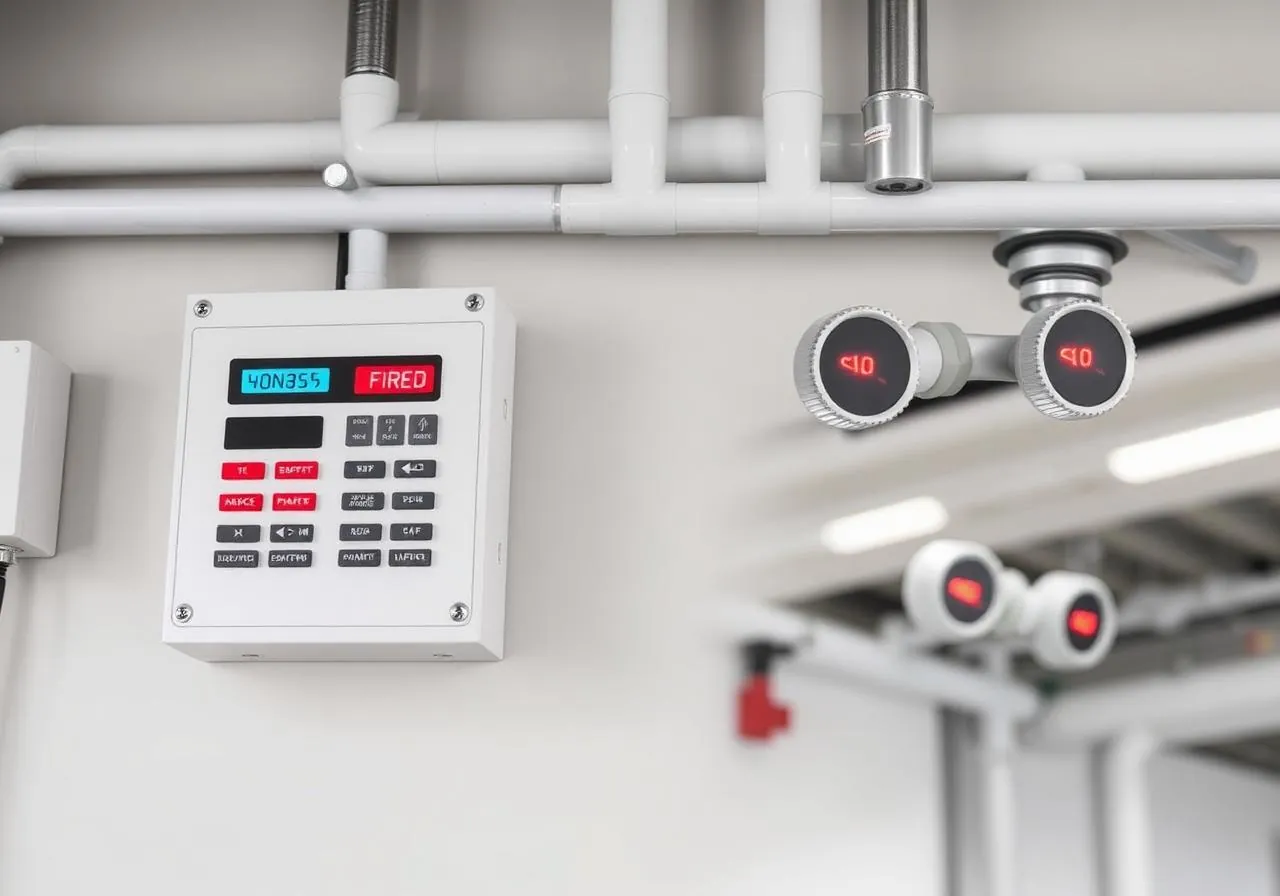
A fire suppression system is a fixed installation that detects fire and automatically discharges an extinguishing agent — gas, foam, water or dry chemical — into the protected area. Unlike portable extinguishers, suppression systems act within seconds, without waiting for a person to intervene, and are engineered around the specific hazard: electronics, cooking oil, flammable liquid, or ordinary combustibles.
The six main types
CO2 (Carbon Dioxide) Systems
Best for: Server rooms, switchgear, generator rooms, flammable liquid stores
How it works: Floods the protected space with CO2, displacing oxygen below the level that supports combustion. Leaves no residue.
Pros
- No residue — safe for electronics
- Extinguishes Class B and electrical (Class C) fires fast
- Cost-effective for unoccupied hazards
Cons
- ›Life-safety risk in occupied spaces (asphyxiation)
- ›Requires pre-discharge alarms and evacuation delay
- ›Not suitable for Class A deep-seated fires alone
Clean Agent Systems (FM-200, Novec 1230, Inergen)
Best for: Data centres, control rooms, museums, archives, telecom rooms
How it works: Discharges an electrically non-conductive gas that suppresses fire by absorbing heat or interrupting the combustion chain — safe for people at design concentrations.
Pros
- Zero residue — no downtime cleaning
- Safe for occupied areas at design concentration
- Discharges in under 10 seconds
Cons
- ›Higher upfront cost than CO2 or dry chemical
- ›Requires a sealed enclosure (room integrity test)
- ›Agent refill cost after discharge
Foam Systems (AFFF, AR-AFFF)
Best for: Fuel depots, aircraft hangars, chemical plants, transformer yards
How it works: Blankets the fuel surface with an aqueous film that seals vapours and cools the fuel, cutting off oxygen supply.
Pros
- Excellent for Class B flammable-liquid fires
- Prevents re-ignition of hot fuel
- Works with fixed systems, monitors and portables
Cons
- ›Water and foam residue requires cleanup
- ›Environmental concerns with some agents
- ›Not for live electrical equipment
Water Sprinkler & Water Mist
Best for: Offices, warehouses, hotels, residential towers, machinery spaces
How it works: Sprinklers open individually when heat activates a glass bulb; water mist uses fine droplets that cool the flame and displace oxygen with steam.
Pros
- Proven, code-mandated in most buildings
- Water mist uses far less water — good for heritage sites
- Automatic, 24/7 protection
Cons
- ›Water damage risk to sensitive contents
- ›Sprinklers need regular flow and pressure testing
- ›Not first choice for live electrical panels
Dry Chemical Systems (ABC / BC Powder)
Best for: Paint booths, vehicles, small industrial hazards, LPG storage
How it works: Discharges monoammonium phosphate or sodium bicarbonate powder that chemically interrupts the flame chain reaction.
Pros
- Very fast knockdown of Class A, B and C fires
- Low cost per kilogram of agent
- Effective outdoors and in windy areas
Cons
- ›Powder residue damages electronics and machinery
- ›Reduces visibility during discharge
- ›Requires thorough post-fire cleanup
Wet Chemical Kitchen Hood Systems
Best for: Commercial kitchens, restaurants, hotels, canteens
How it works: Discharges a potassium-based liquid onto cooking appliances, saponifying hot oils into a soapy layer that smothers Class K fires.
Pros
- Only agent rated for cooking-oil (Class K) fires
- Cools oils below auto-ignition temperature
- Meets NFPA 96 kitchen requirements
Cons
- ›Cleanup required after discharge
- ›Annual servicing mandatory
- ›Only for kitchen hood hazards
How to choose the right system
- 1. Classify the hazard. Class A (ordinary), B (flammable liquids), C (electrical), or K (cooking oil) — each demands a different agent.
- 2. Consider occupancy. CO2 is unsafe for occupied rooms; clean agents and water mist are people-safe at design levels.
- 3. Weigh downtime cost. Data centres and museums justify clean agent's premium because residue-free discharge means zero cleanup.
- 4. Check the local code. Indian standards (IS 2189, IS 15105, NBC 2016) and NFPA references dictate what's acceptable for your building type.
- 5. Plan for maintenance. Every system needs annual service, pressure testing and agent recharge — budget for AMC from day one.
Frequently asked questions
Is a fire suppression system the same as a sprinkler?
Sprinklers are one type of suppression system. "Fire suppression" also covers gas, foam and dry chemical systems designed for hazards where water isn't the best agent.
Which system is best for a server room?
A clean agent system (FM-200 or Novec 1230) is standard for occupied server rooms — it extinguishes fire in seconds, leaves no residue and is safe for people.
How often should a suppression system be serviced?
At least once a year, plus a full agent and cylinder inspection every five years. An annual maintenance contract (AMC) keeps you compliant with IS and NFPA requirements.
Not sure which system fits your site?
Our engineers survey your premises, classify the hazard and design a suppression solution that meets code and budget.